

What happens inside the cloud?
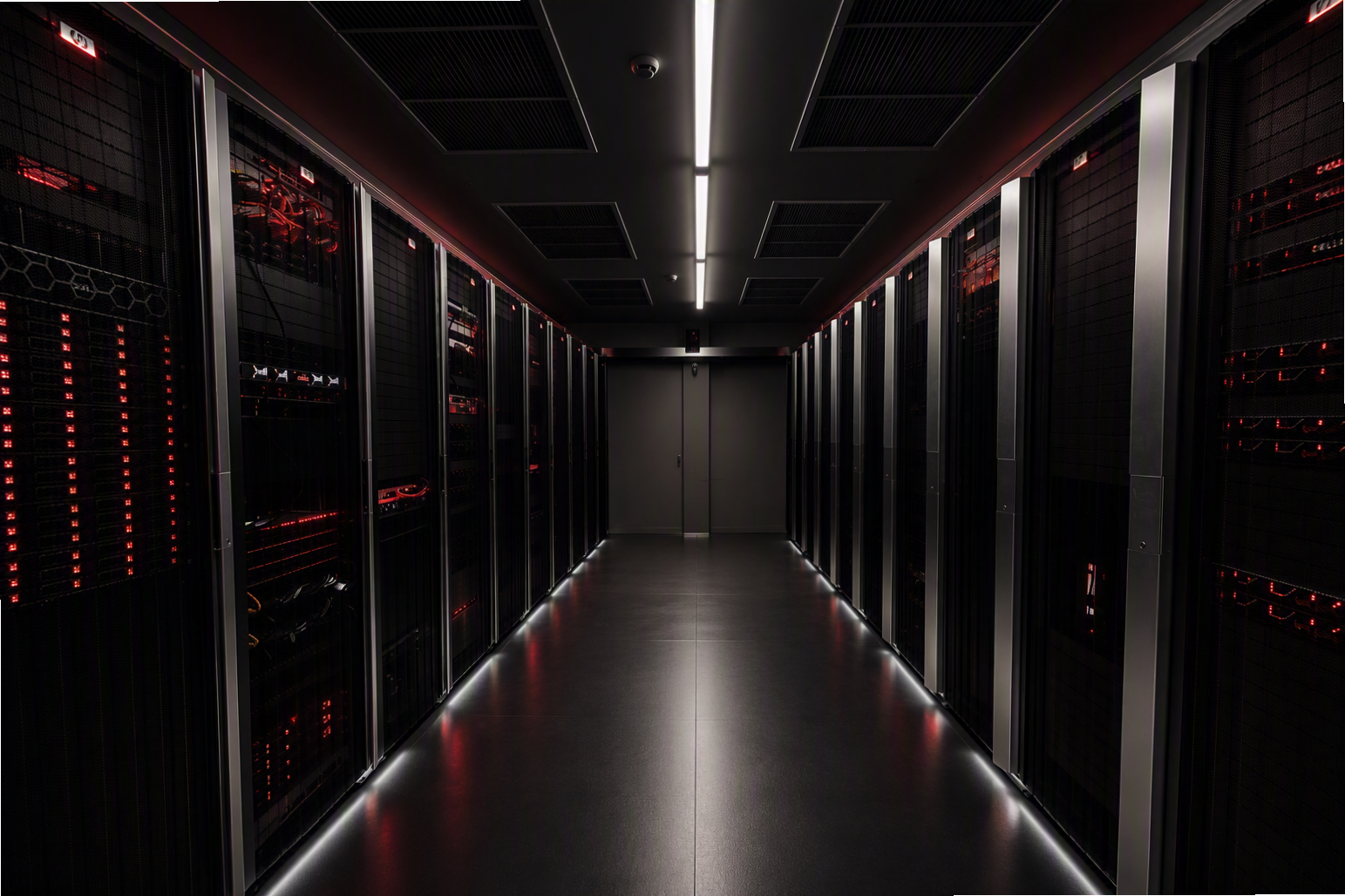
We often talk about “the cloud” as if business data simply disappears into the internet. In reality, cloud services depend on very physical foundations – servers, storage, network connections, power, cooling and buildings designed to keep all of it operating reliably.
At the heart of Advantage Cloud is our data centre in Palmerston North, supported by additional infrastructure in Auckland, Wellington and Christchurch. Together, this infrastructure allows us to provide cloud and hosting services suited to different operational, technical and commercial requirements.
What is inside a data centre?
A data centre brings together the technology required to host and connect business systems. Within the Advantage environment, that includes server, networking and storage infrastructure, internet routing, uninterruptible power supplies and generator capacity. The Palmerston North facility is described as Tier 3 aligned and has dual substation connections, alongside multiple fibre and internet relationships. Each component performs a different role, but the outcome is straightforward – creating a stable environment in which applications, virtual machines and business data can operate.
Using the cloud
Not every organisation wants or needs the same cloud model. Some businesses want a provider to manage the underlying infrastructure, virtual machines and networking. Others have their own IT capability and want to manage the applications that sit on top. Some simply need a secure, connected environment in which to house their own equipment. Advantage Cloud supports four broad approaches:
Hosted or platform services
Advantage provides and manages the infrastructure, virtual services, machines and networking. This may also be combined with support from our Manage, Connect and Protect teams.
Infrastructure as a service
Advantage provides or manages the underlying infrastructure, while the client’s IT team manages its virtual machines and applications.
Co-location
Client-owned equipment is installed in a data centre and managed by the client, while we provide the physical environment, including power, cooling and, where required, internet connectivity.
Hybrid infrastructure
Client-owned equipment can be combined with hosted servers, storage, networking or public cloud resources, creating an environment tailored to the organisation rather than forcing everything into one model.
Why location and visibility matter
For some organisations, knowing where data is held and how it is accessed is important. A local data centre model can provide clearer visibility of the underlying environment, while dedicated connections can support private cloud data held in New Zealand. Our Cloud proposition also emphasises cost certainty, allowing clients to understand the resources they are using and how those resources are charged. This is not necessarily a choice between “private” and “public” cloud. A well-designed environment may use local infrastructure, public cloud services and client-owned equipment together, based on what each workload actually requires.
Investing in the foundation
Our Palmerston North data centre is currently undergoing an extensive refresh. Planned and ongoing work includes upgrades to lighting, flooring and the wider physical environment, alongside continued investment in core data centre infrastructure, including compute, storage, power resilience and virtualisation platforms. An additional storage area is also being refurbished with the longer-term intention of supporting a second data centre space. While much of this work happens behind the scenes, it reflects an important principle – cloud capability is only as strong as the infrastructure beneath it.
Making the cloud less abstract
Choosing a cloud environment should start with understanding an organisation’s needs. Which systems need to be available? Where should data reside? Who will manage each layer? What level of control does the internal team want to retain? Would a hosted, co-location or hybrid model provide the best fit?
Once those questions are clear, the infrastructure can be built around the business, rather than the other way around.
If you’d like to understand which cloud model would best suit your organisation, contact us and a member of our Advantage Cloud team will be happy to discuss the options and what sits behind your applications, data and workloads.
